
Fire blight is a serious bacterial disease that affects many common landscape trees, especially pear, apple, crabapple, and hawthorn trees. The disease gets its name because infected branches often appear scorched or burned, as if they were exposed to fire.
If you have fruit or ornamental trees in your yard, recognizing the early signs of fire blight can help prevent the disease from spreading to the rest of the tree—or to neighboring trees.
Below is what homeowners should look for when trying to identify fire blight.
The Most Common Signs of Fire Blight
Fire blight can affect multiple parts of a tree, including blossoms, leaves, twigs, and branches. The symptoms usually appear in spring or early summer and may worsen as temperatures rise.
1. Blackened or Burned-Looking Leaves
One of the most recognizable signs of fire blight is leaves that turn dark brown or black but remain attached to the branch. Instead of falling off like normal dead leaves, they often stay on the tree.
This gives the branch a burned appearance, which is where the disease gets its name.
2. Shepherd’s Crook Branches
Infected twigs and shoots often curl downward at the tip, forming a shape commonly called a “shepherd’s crook.”
This curved shape is a classic indicator of fire blight and is often one of the first visible symptoms.
3. Dark or Oozing Branches
As the infection progresses, the bark on branches may appear dark, sunken, or cracked. In some cases, you may notice a sticky or amber-colored ooze coming from infected areas.
This substance contains bacteria that can spread the disease to other parts of the tree or nearby plants.
4. Dead Blossoms
Fire blight often begins in spring when trees are flowering. Infected blossoms may:
-
Turn brown or black
-
Shrivel quickly
-
Remain attached to the tree
These infected blossoms can allow the disease to move deeper into the branches.
Quick Reference Chart: Fire Blight Symptoms
| Symptom | What It Looks Like | What It Means |
|---|---|---|
| Blackened leaves | Leaves look burned and stay attached | Early sign of infection |
| Shepherd’s crook twigs | Curved or drooping branch tips | Classic fire blight indicator |
| Oozing branches | Sticky amber-colored sap | Active bacterial infection |
| Dead blossoms | Brown or shriveled flowers | Infection likely started in spring |
| Dark bark or cankers | Sunken or cracked areas on branches | Advanced stage of disease |
Why Fire Blight Spreads Quickly
Fire blight spreads through bacteria carried by insects, rain, wind, and pruning tools. Warm, humid weather often accelerates the spread.
Once the disease enters a tree, it can move through the branches and even reach the trunk. If that happens, the entire tree may decline quickly.
Because of how aggressive the disease can be, early identification is extremely important.

Can Fire Blight Be Treated?
In some cases, fire blight can be managed by pruning infected branches well below the diseased area. However, pruning must be done carefully, and tools must be sanitized to avoid spreading bacteria.
If the infection has spread into large branches or the trunk, the tree may not recover. Severely infected trees can also become a source of infection for nearby trees and landscaping.
This is when tree removal may be the safest option to protect the rest of your property.
When to Call a Professional
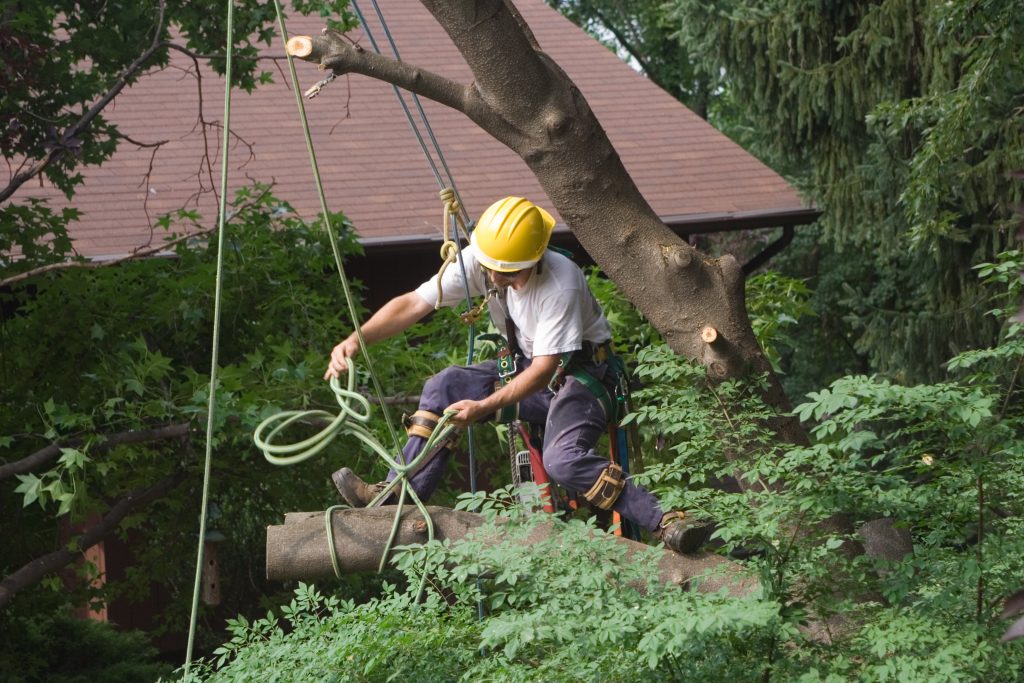
Because fire blight spreads quickly and can be difficult to control, homeowners should consider professional help if they notice multiple infected branches or rapid decline.
A tree professional can:
-
Evaluate the severity of the infection
-
Determine whether pruning or removal is the best option
-
Help prevent the disease from spreading to other trees

Protect Your Property with Professional Tree Removal
If a tree on your property is severely affected by fire blight, removing it may be the best way to prevent the disease from spreading to nearby trees and landscaping.
In severe cases, fire blight can spread through the entire canopy of a tree, making professional tree removal services the safest option to prevent the disease from spreading to nearby trees.
FAQ about Fire Blight?
How do you identify fire blight?
Fire blight is identified by blackened or scorched-looking leaves and blossoms, wilted shoots that curl into a “shepherd’s crook,” and sometimes sticky amber-colored bacterial ooze on branches.
How do you get rid of fire blight?
Fire blight is controlled by pruning infected branches 8–12 inches below the damaged area, disinfecting tools between cuts, and in severe cases removing the affected tree.
How does blight look like?
Blight typically appears as dark, shriveled leaves and blossoms, dying shoots that bend downward, and bark that may crack or ooze a sticky substance.
How contagious is fire blight?
Fire blight spreads easily between susceptible trees through rain, wind, insects, and contaminated pruning tools, making it highly contagious during warm, wet conditions.
michelle
As a seasoned content writer for the home services industry, I specialize in creating accurate and approachable articles on tree care and removal. With a bachelor’s degree in Human Development and Family Studies and a master’s in Education, I bring a thoughtful, research-driven approach to every piece. For the past four years, I’ve worked alongside certified arborists and experienced tree professionals to craft content that helps homeowners understand issues like root damage, tree health, pruning techniques, and safe removal practices.