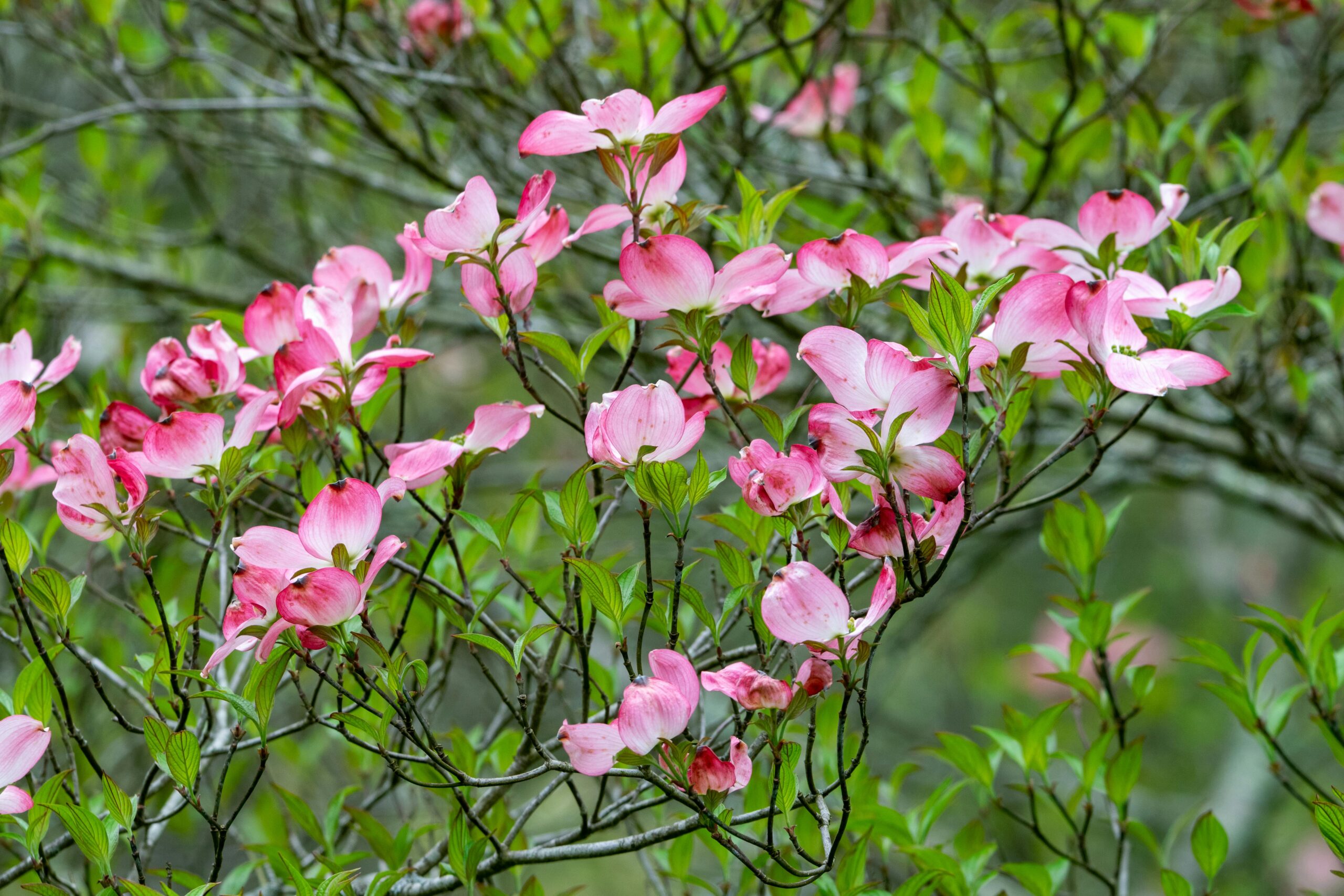
Dogwood trees are some of the most beautiful landscape trees around — their spring blooms and graceful shape make them a homeowner favorite across North Texas. But if yours suddenly isn’t looking so great, it’s natural to wonder: Is my dogwood tree dead, or just struggling?
Before you schedule a removal, here’s how to tell what’s really going on with your tree — and when it might be time to call in a professional.
1. Check the Bark and Branches
Start with a simple scratch test. Gently scrape a small section of bark from a twig or branch. If the wood underneath is green and moist, your dogwood is still alive. But if it’s brown, dry, or brittle, that branch is likely dead.
Healthy bark should also stay fairly smooth and attached. If it’s peeling away or splitting, especially around the trunk, that’s a warning sign your tree could be in serious decline.
2. Look at the Leaves (or Lack Thereof)
A dogwood that’s still alive will typically show some signs of life during the growing season — even if it’s stressed. Sparse foliage, yellowing leaves, or early leaf drop can all indicate disease, drought, or root damage.
If your tree has no leaves at all during a time when it should be in bloom, it may be beyond recovery.
3. Watch for Fungal Growth or Pest Damage
Dogwoods are prone to several common issues, including anthracnose, a fungal disease that causes dark leaf spots, cankers, and dieback. You may also see borer holes or other signs of insect activity on the trunk.
When pests or fungi take hold, they can weaken the tree’s structure from the inside out — creating potential hazards on your property. If you’re noticing cracked limbs, hollow wood, or spreading decay, it’s best to get a professional opinion.
(If you’re seeing warning signs that your tree could fall, read our post on emergency tree removal signs to know when you shouldn’t wait.)
4. Consider the Season and Weather
Sometimes, a dogwood just needs more time. Late frosts, droughts, or extreme summer heat can delay blooming or cause temporary leaf loss. Give your tree a little patience before assuming the worst — but keep monitoring it for recovery.
If the problem continues for multiple seasons, though, that’s a strong indicator the tree may not bounce back.
5. When It’s Time to Remove Your Dogwood Tree
If your dogwood is completely bare, crumbling, or hollow inside, removal might be the safest and most responsible option. Dead trees can become unstable, especially during wind or storms, posing a danger to your home and family.
When that time comes, trust the experts at Torres Tree Service to handle the job safely and efficiently. Our licensed team provides full tree removal services across the DFW area, including stump removal and clean-up.
Dogwood Tree Health Check: Signs of Life vs. Signs of Decline
| Tree Feature | Healthy Dogwood | Possibly Dying or Dead Dogwood |
|---|---|---|
| Bark | Smooth, intact bark that’s firmly attached to the trunk | Peeling, cracked, or falling bark; soft or crumbling wood |
| Branches (Scratch Test) | Green, moist layer beneath the bark | Brown, dry, or brittle interior when scratched |
| Leaves | Full canopy with vibrant green leaves (seasonally appropriate) | Sparse, yellow, or no leaves during the growing season |
| Trunk | Solid and firm to the touch | Hollow or soft spots, fungal growth, or pest holes visible |
| Roots/Base | Firmly anchored in soil, no visible decay | Mushy or dark roots, mushrooms or fungus at the base |
| Seasonal Changes | Slow recovery after cold or drought, new buds forming | No bud growth for multiple seasons, bare branches year-round |
| Response to Care | Improves with watering, pruning, or treatment | No improvement after consistent care and time |
Call Torres Tree Service for Expert Help
If you’re still not sure whether your dogwood is dead or just stressed, don’t guess — let a professional take a look. Torres Tree Service offers honest assessments and dependable care for all types of trees, from dogwoods to oaks.
📞 Contact us today to schedule an inspection or tree removal service and keep your property safe, healthy, and beautiful year-round.
FAQ about Dogwood Trees
How to tell if a tree is completely dead?
Check for flexibility by bending small twigs; dead twigs will snap easily. Also, look for a complete lack of leaves during the growing season and brittle, dry bark that doesn’t show a green layer when lightly scratched.
How to revive a dogwood tree?
First, ensure it is planted in a suitable partly-shaded location with well-drained, acidic soil. Then, water it deeply during dry spells, apply a layer of mulch, and prune out any dead or diseased branches to encourage new growth.
What is the average lifespan of a dogwood tree?
The average lifespan of a dogwood tree is typically 80 years. However, in ideal conditions with proper care and without disease, some can live well beyond that.
Will dogwood grow back?
Yes, dogwoods are generally good at regenerating. If the root system is still healthy, it will often send up new shoots even if the main trunk has been damaged or cut down.

michelle
As a seasoned content writer for the home services industry, I specialize in creating accurate and approachable articles on tree care and removal. With a bachelor’s degree in Human Development and Family Studies and a master’s in Education, I bring a thoughtful, research-driven approach to every piece. For the past four years, I’ve worked alongside certified arborists and experienced tree professionals to craft content that helps homeowners understand issues like root damage, tree health, pruning techniques, and safe removal practices.