
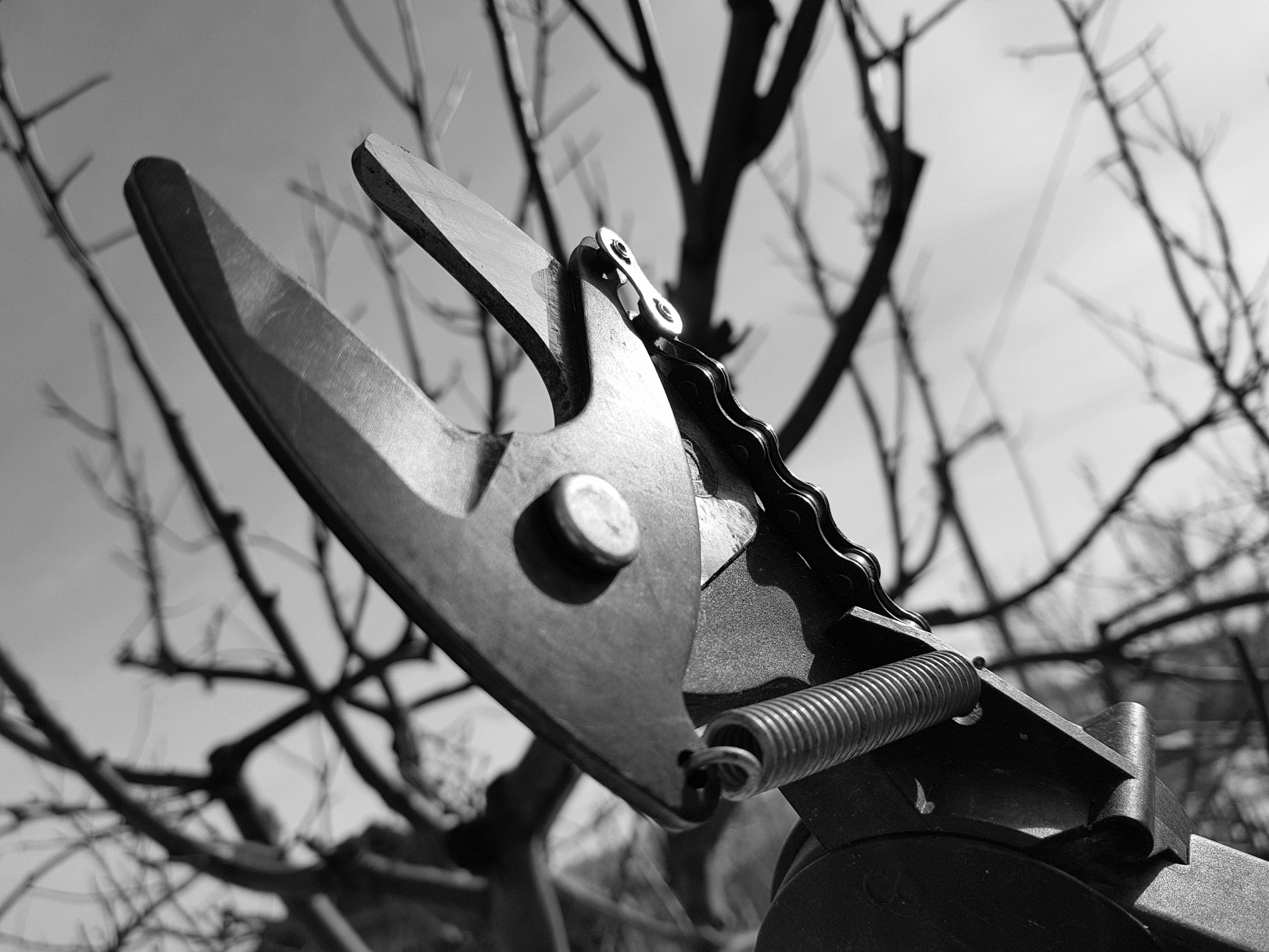
Winter is the perfect time to prune many types of trees. With leaves off deciduous trees, it’s easier to see the structure of your branches, making it simpler to remove dead or problematic limbs. Proper winter pruning not only keeps your trees healthy but also encourages growth in the spring and reduces the risk of disease.
Before we dive into the pruning process, it’s important to understand the difference between pruning and trimming.
Pruning vs. Trimming
-
Pruning: Focuses on removing dead, diseased, or structurally unsound branches to improve the tree’s health and shape. It’s a more precise and strategic process.
-
Trimming: Primarily for aesthetic purposes, trimming shapes the tree, removes overgrowth, or maintains size, but doesn’t necessarily target health issues.
How to Prune Trees in Winter
Follow these steps to safely and effectively prune your trees:
1. Gather the Right Tools
-
Pruning shears for small branches (up to ¾ inch)
-
Loppers for medium branches (up to 2 inches)
-
Pruning saw for larger branches
-
Safety gear: Gloves, safety glasses, and a hard hat for larger trees

2. Identify What to Cut
-
Dead or diseased branches: These should be removed first to prevent disease spread.
-
Crossing or rubbing branches: Remove to prevent wounds and structural weakness.
-
Weak or narrow crotches: Branches with narrow angles are prone to breaking and should be cut.
-
Suckers and water sprouts: Remove growth from the base or trunk, as it weakens the tree’s structure.
3. Use Proper Cutting Techniques
-
The 3-cut method for large branches:
-
Under-cut a few inches from the trunk to prevent bark tearing.
-
Top-cut a few inches further out to remove the branch.
-
Final cut close to the trunk, just outside the branch collar.
-
-
Angle cuts: Cut at a slight angle to encourage proper healing.
-
Don’t cut too close: Avoid cutting flush with the trunk; leave the branch collar intact.

4. Step Back and Assess
After cutting, step back to ensure the tree maintains a natural shape and balanced structure. Avoid over-pruning, as removing too much can stress the tree and stunt growth.
5. Dispose of Debris Properly
Remove all pruned branches from the area to reduce disease risk and maintain garden aesthetics. Large limbs can often be chipped for mulch.
Real-World Tips for Winter Tree Pruning
-
Fruit trees: Prune in late winter while trees are dormant to maximize fruit production.
-
Maple and birch: Prune before the sap starts to flow to prevent bleeding.
-
Evergreens: Limit pruning to shaping; heavy cuts can stress them during cold months.
-
Avoid extreme cold: On very cold days, delay pruning to prevent frost cracks on exposed cuts.
Read our article titled, “6 Best Trees to Plant in North Texas,” to find out what you should plant next.
Tree Pruning vs. Trimming at a Glance
| Feature | Pruning | Trimming |
|---|---|---|
| Purpose | Health, structure, disease prevention | Aesthetic shaping, size control |
| Branch Selection | Dead, diseased, weak | Overgrowth, uneven shape |
| Timing | Late winter (dormant season) | Anytime for maintenance |
| Tools Needed | Shears, loppers, saw | Shears, hedge trimmers |
| Impact on Tree | Promotes growth, prevents disease | Cosmetic, minimal health impact |
Final Thoughts
Pruning your trees in winter is a little intimidating, if you need help pruning or trimming your trees and shrubs, head over to our tree trimming service page to get an appointment scheduled.
FAQ about Pruning Trees
Is it OK to prune trees in the winter?
Yes, winter is often the best time to prune deciduous trees while they are dormant, as it reduces stress, minimizes sap loss, and makes it easier to see the tree’s structure.
What months should you not prune trees?
Avoid pruning in late spring and early summer when trees are actively growing, as cuts can increase the risk of disease and insect infestation.
What are the five rules of pruning?
-
Remove dead, diseased, or damaged branches first.
-
Cut branches at the branch collar, not flush with the trunk.
-
Use proper tools and make clean cuts.
-
Avoid over-pruning; never remove more than 25% of the tree at once.
-
Step back and maintain the tree’s natural shape.
What is the 1-2-3 rule of pruning?
The 1-2-3 rule is a method for removing large branches: 1) Make an undercut a short distance from the trunk, 2) make a top cut slightly further out to remove the branch, and 3) make the final cut just outside the branch collar.
michelle
As a seasoned content writer for the home services industry, I specialize in creating accurate and approachable articles on tree care and removal. With a bachelor’s degree in Human Development and Family Studies and a master’s in Education, I bring a thoughtful, research-driven approach to every piece. For the past four years, I’ve worked alongside certified arborists and experienced tree professionals to craft content that helps homeowners understand issues like root damage, tree health, pruning techniques, and safe removal practices.