
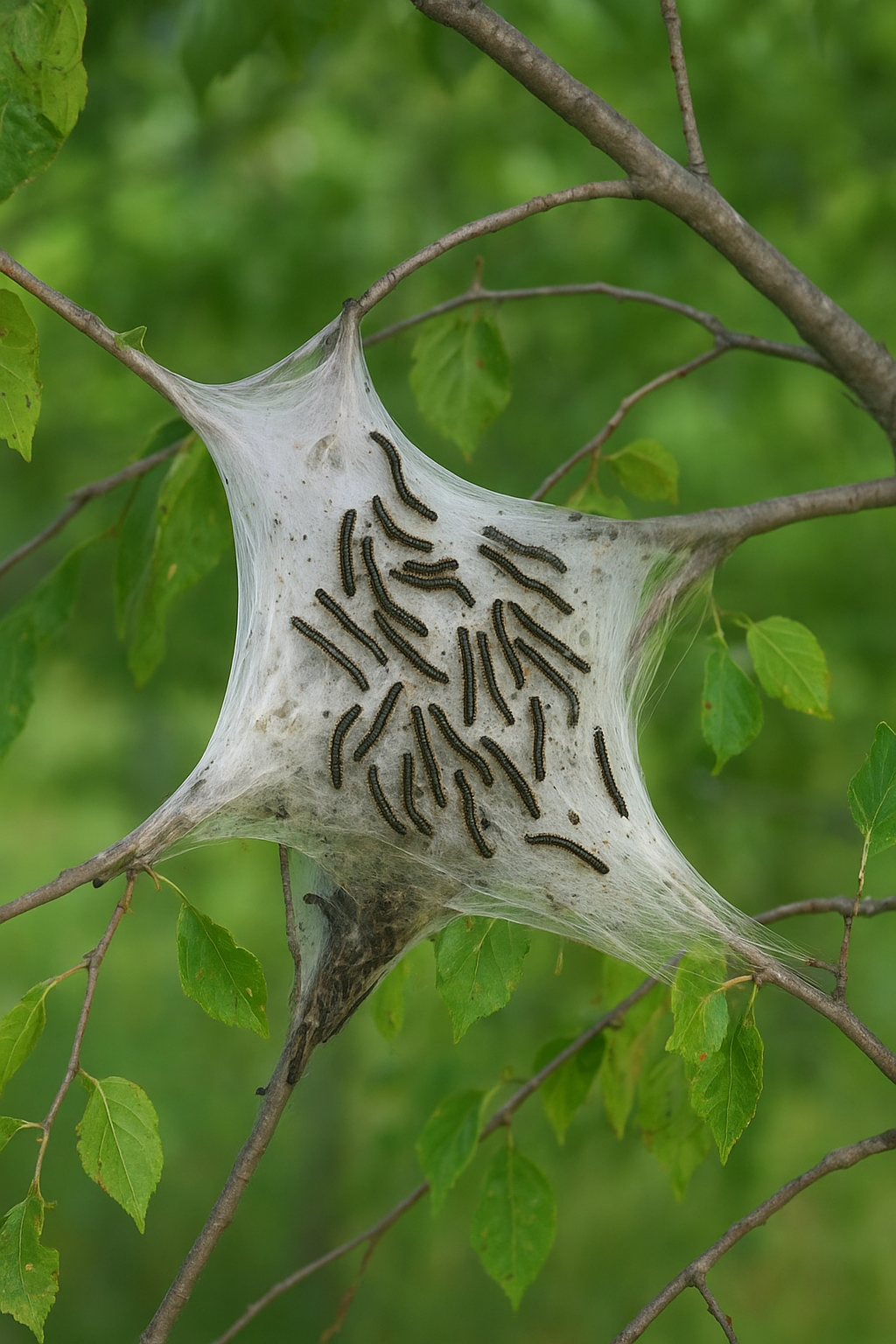
Short answer: Tent caterpillars can harm trees, but they rarely cause long-term damage. They’re mostly a cosmetic problem — but heavy infestations can stress young or already weakened trees. At Torres Tree Service, we’re here to give you the real deal about tent caterpillars so you can protect your trees without the panic.
🌳 What Are Tent Caterpillars, Really?
Tent caterpillars are early-season defoliators that build those white, webby “tents” in the forks of tree branches. They’re most active in spring and feed heavily on leaves before pupating into moths.
They look dramatic — and honestly, a little creepy — but most established trees bounce back quickly after an infestation.
🌿 Are Tent Caterpillars Dangerous to Trees?
Not usually.
Here’s the breakdown:
-
Healthy, mature trees can survive complete leaf loss and re-leaf later in the season.
-
Young, newly planted, or stressed trees can be harmed because defoliation drains their energy.
-
Repeated infestations over several years can lead to:
-
reduced growth
-
increased vulnerability to pests
-
branch dieback
-
So while they’re not tree killers, they’re definitely not harmless guests either.

🔥 Should You Remove Tent Caterpillars?
Yes — especially if they’re causing noticeable defoliation.
You don’t have to use harsh chemicals. In most cases:
-
Remove the tent by hand (if reachable)
-
Prune small infested branches
-
Use horticultural oil or BT-based treatments for heavy infestations
-
Call a professional for larger colonies or difficult-to-reach areas
If you’re unsure, Torres Tree Service can assess the situation and recommend the safest solution.
📊 Tent Caterpillars: Quick Facts Chart
Here’s a simple and clear chart to include in your post:
| Issue | Impact on Trees | Risk Level | Notes |
|---|---|---|---|
| Leaf eating / defoliation | Temporary leaf loss | Moderate | Mature trees recover; young trees may struggle |
| Tents in branches | Cosmetic issue | Low | Does not directly harm the tree |
| Repeated infestations | Reduced growth, stress | High | Can cause decline over time |
| Tree death | Rare | Very Low | Only occurs if tree is already weak or stressed |
| Best management | Pruning, physical removal, BT treatments | — | Avoid overuse of chemicals |
🌱 How to Prevent Tent Caterpillars
A few simple care steps can reduce the likelihood of infestations:
-
Keep trees properly pruned
-
Water during drought stress
-
Encourage beneficial insects
-
Remove egg masses during winter (they look like foamy rings on small branches)
Healthy trees resist pests more effectively than neglected ones.
What Types of Trees Do Tent Caterpillars Like?
Tent caterpillars prefer deciduous hardwood trees, especially those in the rose family. Their top favorites include:
-
Cherry trees (their #1 host) Read this article and learn 12 Tips for Growing Cherry Trees in North Texas.
-
Apple trees
-
Plum and peach trees
-
Crabapple trees
-
Hawthorn
-
Cottonwood and poplar
-
Maple (occasionally)
They typically avoid evergreen trees and most conifers.

🌲 Need Help? We’re Here for You
If tent caterpillars are taking over your trees — or you’re simply unsure what you’re dealing with — the team at Torres Tree Service is ready to help. We can identify the pest, assess damage, and recommend the best treatment for long-term tree health.
If you think a tent caterpillar infestation has damaged your tree beyond repair, check out our tree removal service page.
FAQ about Tent Caterpillars
Should I get rid of tent caterpillars?
You don’t always need to remove tent caterpillars, because healthy trees can usually tolerate their feeding. However, if the infestation is large or the tree is young or stressed, removing them can help prevent defoliation.
What do tent caterpillars turn into?
Tent caterpillars eventually become small, brownish moths. The moths themselves are harmless and short-lived.
Which caterpillars are bad for trees?
Caterpillars like bagworms, gypsy moth (spongy moth) caterpillars, and fall webworms can cause serious damage by stripping leaves and weakening trees. Tent caterpillars can also cause defoliation but rarely kill a healthy tree.
How to get rid of tent caterpillars in a tree?
The easiest method is to remove their silky tents by hand and dispose of them, preferably in the early morning or evening when caterpillars are inside. You can also prune out affected branches or use a natural spray like BT (Bacillus thuringiensis) for heavier infestations.
michelle
As a seasoned content writer for the home services industry, I specialize in creating accurate and approachable articles on tree care and removal. With a bachelor’s degree in Human Development and Family Studies and a master’s in Education, I bring a thoughtful, research-driven approach to every piece. For the past four years, I’ve worked alongside certified arborists and experienced tree professionals to craft content that helps homeowners understand issues like root damage, tree health, pruning techniques, and safe removal practices.